
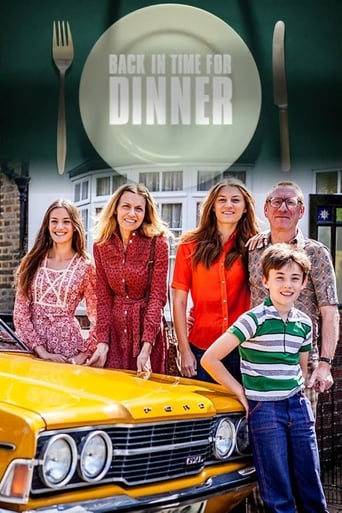
Back in Time for Dinner
One British family embark on an extraordinary time-travelling adventure to discover how a post-war revolution in the food we eat has transformed the way we live. Starting in 1950 and guided by real records of what ordinary families ate for breakfast, lunch and dinner, they will go from meagre rations to ready meals and delivery pizza in just six weeks.
Seasons
Episodes
A British family experiences 1950s life: a poky kitchen and a diet including dried eggs. The family's own home becomes their time machine and, in this first episode, travels back to 1950 - so it's goodbye open-plan living, hello formal dining room and poky kitchen with the most basic facilities. Guided by presenter Giles Coren, food historian Polly Russell and the National Food Survey (an extraordinary collection of food diaries from the last 50 years), the family can only consume the food of the period - cue a diet of dried eggs, national bread, dripping and liver. 'We've just eaten the grimmest meal I've ever tasted.' And taking on the roles of the period, it's mum doing all the cooking, while dad is banished to the hearthside with a pipe and slippers... The family mood is lightened by the end of rationing in 1954, heralding the consumer boom of the late 50s - Mary Berry sells them an electric oven on hire purchase (a job she actually used to do in the 1950s!) and mum discovers that, with all the new food, fads and gadgets on offer, cooking gets a lot more complicated...
In this second episode, the family and their home are transported to the space-age 60s, with a gleaming fitted kitchen and the arrival of a host of new tastes and flavours. Presenter Giles Coren and food historian Polly Russell use the national food survey, an extraordinary collection of food diaries, to guide the family's diet and introduce them to the culinary treats of the decade, from the first spaghetti bolognese to Chinese restaurants and the excitement of their very first TV dinner, an oh-so-glamorous Vesta meal. Hairy Biker Dave Myers delivers the family their long-awaited fridge, along with his memories of the transformative effect of the appliance on his own childhood. There's a family trip to the new-fangled self-service supermarket, and Giles discovers how chicken went from an expensive treat to an everyday staple.
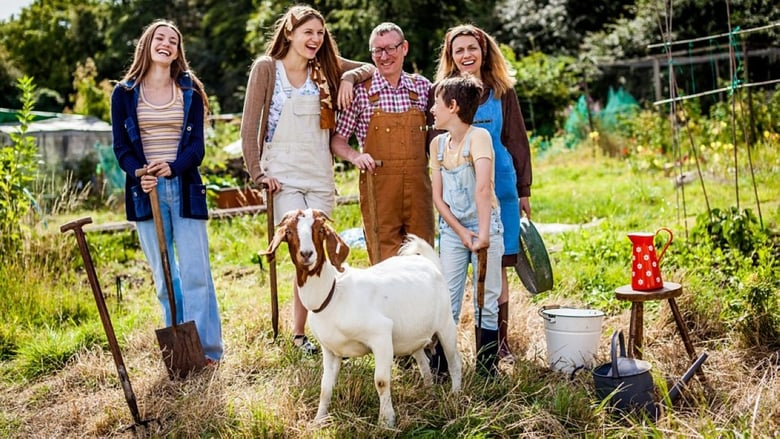
The family and their home strut into the 70s, and culinary innovations come thick and fast. In this episode, the family and their home strut into the 70s. Mary Berry is on hand to help the family stock up their brand new chest freezer, and mum is liberated from the kitchen and gets a job for the first time, discovering how frozen and convenience food became a lifesaver for time-pressed working women. Giles meets the two hippies whose 70s adventures in health food spawned our national addiction to houmous, and the family go all Good Life and discover that milking a goat is nowhere near as simple as it looks. But the 70s wasn't all hippy food. Rapid developments in food technology see the culinary innovations come thick and fast, from powdered orange juice to Pot Noodle and boil-in-the-bag cod, while the birth of artificial-flavour technology sees the children's favourite crisps arrive just in time for their silver jubilee street party.
In this episode, the family and their home are transported to the hi-tech 80s, with a gadget-filled kitchen including a microwave the size of a small car. Presenter Giles Coren and food historian Polly Russell use the national food survey, an extraordinary collection of food diaries, to guide the family's diet and introduce them to the culinary treats and trends of the decade. Technology takes centre stage, enabling the family to microwave an entire roast dinner, make their own fizzy drinks and produce the very latest in culinary fashion - a cheese and ham toastie. Outside the home, novelty comes thick and fast with the arrival of the pre-packed sandwich, the rise of both nouvelle cuisine and the fast-food chains and a host of new tastes and flavours from around the globe now available at their local supermarket.
Giles Coren and Polly Russell introduce the family to the culinary treats of the 90s. The Robshaw family enter the 90s. It might sound recent, but the years that have elapsed since 1990 soon become obvious - from John Gummer encouraging his daughter to take a bite out of a beef burger to the triumphant growth of the mammoth out-of-town superstore and the arrival of new kid on the block Jamie Oliver. The family start the decade delighting in the vast quantities of food now available from around the globe - but soon realise there are definite downsides to the previous decades' drive towards cheaper and cheaper food. Presenter Giles Coren and food historian Polly Russell introduce them to the culinary treats of the era - from bagged salad and cook-in sauces to organic veg boxes and the gastro pub, while 90s TV stars Fern Britton, Brian Turner, Malcolm Gluck, Delia and Jamie all remind them how food and drink came to dominate the TV schedules of the decade.
After six weeks of culinary time travel, the Robshaw family are thrown forward as presenter Giles Coren and food historian Polly Russell introduce them to some startling tastes of the future. Based on the family's experience of the way our food history has unfurled, some predictions are made about how we'll shop, cook and eat over the next 50 years.
More Like This
TV shows with a similar genre, style and mood

Car Crash TV

The Great Pottery Throw Down

Tattoo Fixers Extreme
Rick Stein: From Venice to Istanbul

Back in Time for Christmas
Money for Nothing

Made in Chelsea LA

Dr. Jeff: Rocky Mountain Vet
Married at First Sight UK

Ninja Warrior UK
Louis Theroux: By Reason of Insanity
A Cook Abroad
FILMARNIK does not host any video files. All content is provided by third-party sources.